
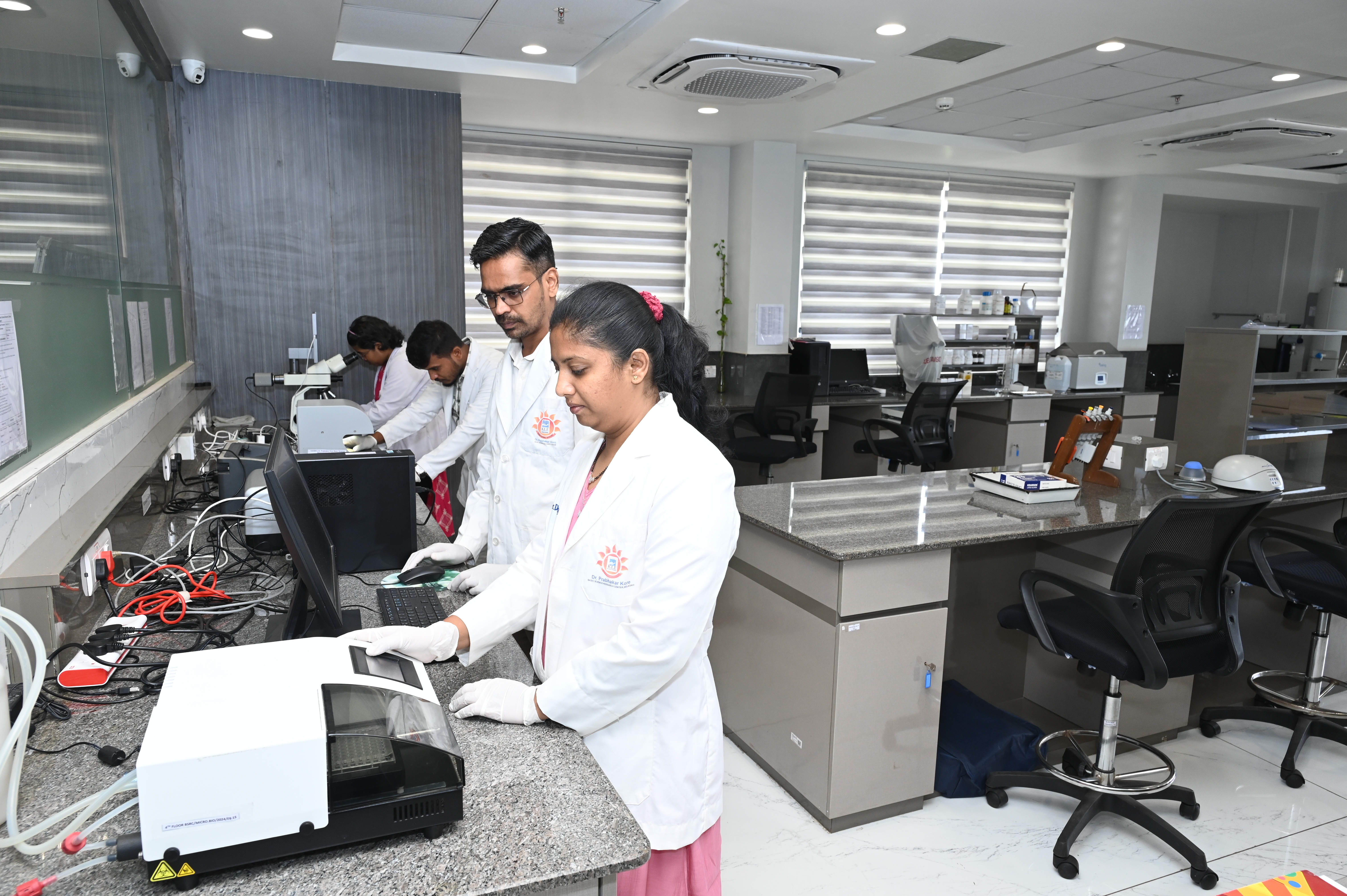
The Laboratory serves as a dynamic center for advanced microbiological research, providing technical expertise and scientific guidance to post-graduate students, faculty members, and collaborators across various KAHER institutions. It offers an excellent platform for hands-on training, internships, interdisciplinary research, and collaborative projects in diverse areas of Microbiology. With a strong commitment to scientific excellence, innovation, and teamwork, the laboratory actively fosters a highly competitive research environment while promoting knowledge sharing, collaboration, and translational research initiatives. The Microbiology Laboratory focuses on the isolation, identification, and characterization of bacteria, fungi, and actinomycetes from clinical and environmental samples.
Core areas of Research
Infectious diseases, AMR and Alternative therapies.
Research in infectious diseases primarily focuses on typhoid fever, dermatophytic infections, and other clinically significant bacterial diseases. The laboratory actively investigates antimicrobial resistance, virulence mechanisms, biofilm formation, and susceptibility patterns of pathogenic microorganisms including Salmonella enterica, Staphylococcus aureus, and dermatophytic fungi. In future research will also focus on probiotics, plant-derived compounds, and novel antimicrobial agents for effective disease management.
Bacterial omics and Bioinformatics
Stress response is an important adjuvant target for combating antimicrobial resistance because bacteria use stress pathways to survive antibiotic exposure, persist in hostile environments, and activate resistance mechanisms. Targeting these pathways can weaken microbial adaptation and restore the effectiveness of existing drugs. Bioinformatics approach was applied to identify anti-diabetic activity of phytochemicals from Butea monosperma.
Further, the Microbial culture repository is also maintained at our lab and in addition we have submitted 13 bacterial and 4 fungal isolates in National Centre for Biotechnology information (NCBI, Nucleotide databases).
The laboratory is equipped with aerobic and anaerobic culture systems, Digital Microscopes, Colony counter, Laminar air cabinets, ELISA Reader, Fungal incubator. We evaluate antimicrobial activity of synthetic compounds and herbal extracts using standardized assays such as Minimum Inhibitory Concentration (MIC), Minimum Bactericidal Concentration (MBC), antibiotic susceptibility testing, time-kill, anti-biofilm, and anti-adhesion assays.
Lab Staff: Dr. Sunil Dodamani, Ms Rubeen Nadaf, Dr. Nagarjuna, Ms Sayali Manjarekar