
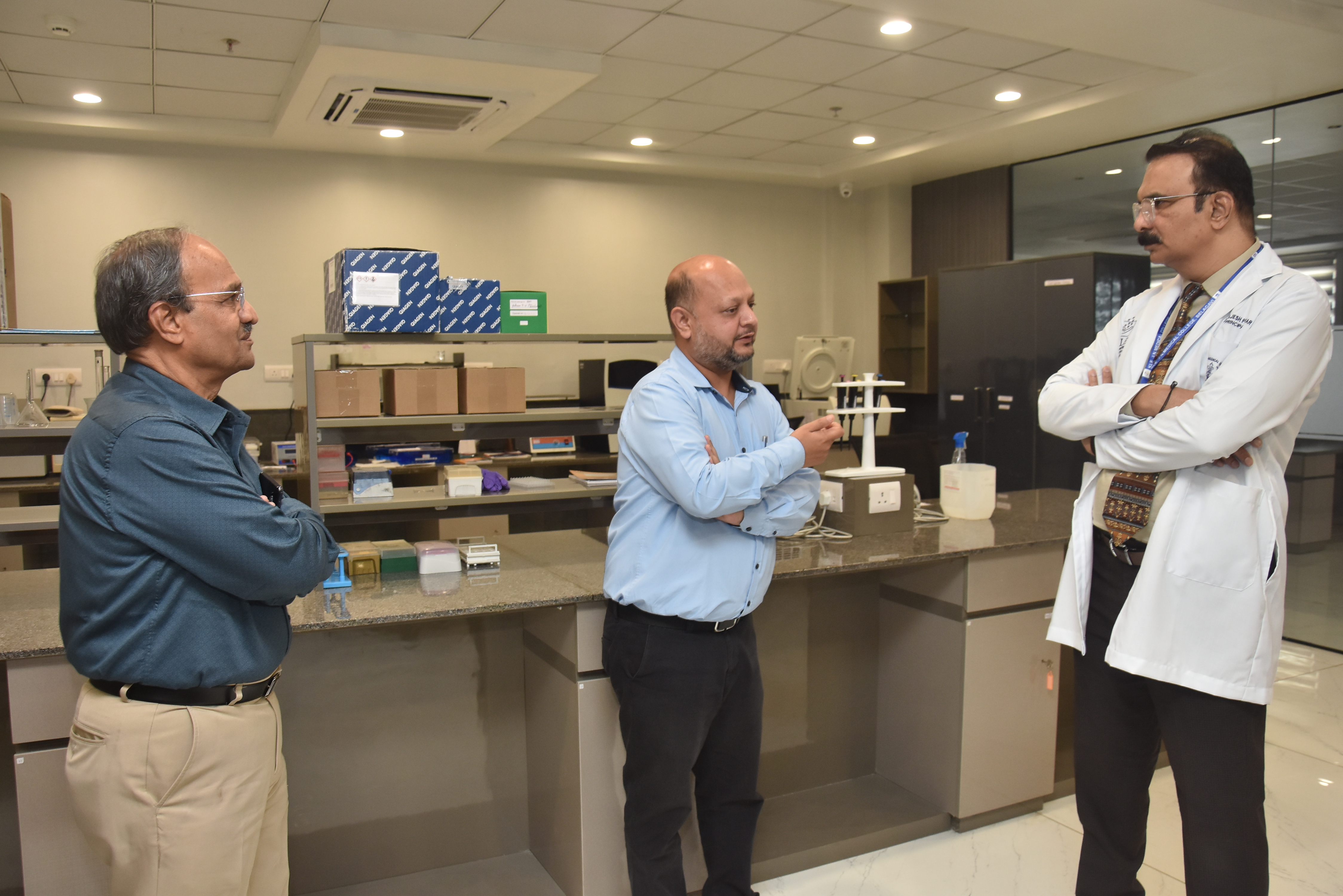
The Molecular Biology Facility serves as a multidisciplinary translational research platform dedicated to advancing molecular medicine, cancer biology, medical genetics, and regenerative therapeutics.
The laboratory actively works toward bridging fundamental benchside research with clinical applications through innovative investigations in molecular oncology, epigenetics, exosome biology, liquid biopsy, and precision medicine. As an active academic research hub, the lab supports multiple Ph.D. scholars, postgraduate students, and undergraduate researchers engaged in collaborative, interdisciplinary biomedical projects.
With expanding technical expertise, an interdisciplinary environment, and advanced molecular infrastructure, the laboratory continues to broaden its activities into additional cancers, complex human diseases, and emerging areas of translational biomedical science.
Core Research Focus Areas are
1. Molecular Oncology, Genetics & Epigenetics: A major focus of the laboratory is understanding the molecular mechanisms underlying cancer development and progression. Current research involves identifying and characterizing genetic and epigenetic biomarkers associated with malignancies such as Breast cancer and lung cancer, Prostate cancer, Oral Squamous Cell Carcinoma (OSCC) and Oral Potentially Malignant Disorders (OPMDs). The studies are focussed on assessment of genetic risk, new diagnostic biomarkers such as circulating DNA and biomarkers for monitoring the effect of treatment of cancers.
Investigations include differential gene expression analysis, microRNA (miRNA) profiling, and the characterization of genetic variations such as Single Nucleotide Polymorphisms (SNPs), Single Nucleotide Variants (SNVs), and Insertions/Deletions (InDels) to better understand disease susceptibility, tumor progression, prognosis, and therapeutic response.
The laboratory also conducts promoter region and CpG island methylation studies using Methylation-Specific PCR (MS-PCR) to identify early diagnostic and prognostic biomarkers in cancer and premalignant conditions.
2. Exosome Biology & Translational Nanomedicine: Investigations in this domain focus on the isolation and characterization of exosomes derived from cancer stem cells as well as natural biological sources, including milk and plants. These studies explore the potential of exosomes to serve as multi-functional platforms, specifically targeting their utility as 1. Diagnostic and prognostic biomarkers 2. Targeted nano-carrier vehicles for site-specific drug delivery 3. Regenerative therapeutic agents for tissue engineering and precision oncology applications
3. Emerging Frontier: Gut Microbiome Dynamics: Additionally, the laboratory has initiated molecular-level investigations focusing on gut microbiome dynamics and their association with metabolic syndromes and related disorders. Utilizing Next-Generation Sequencing (NGS) approaches through collaborations. These emerging studies aim to map and explore unique microbial and molecular signatures involved in metabolic health, disease progression, and therapeutic response.
Research Infrastructure: To support these routine molecular investigations, the laboratory is equipped with core biomedical instrumentation like, Real-Time PCR System (StepOne Plus), a Thermal Cycler/PCR System (Veriti–Invitrogen), and standard gel electrophoresis units for DNA, RNA, and protein analysis. Nucleic acid and protein quantification are assessed by Implen NanoPhotometer N60 and Eppendorf BioPhotometer systems, while immunoassay work is supported by BioTek Epoch Microplate Spectrophotometer ELISA microplate reader and liquid handling systems.
Lab Staff: Dr. Bhushan Kulkarni, Dr. Shridhar Ghagne, Dr. Vijay Kumbar, Dr. Madhavi Patil
Research Scholars: